What Are the Roth IRA Income and Contribution Rules?
Before contributing a single dollar, it genuinely helps to understand the rules first. Roth IRA eligibility depends heavily on your income level, and getting these details wrong can unfortunately trigger unexpected penalties down the road.
Before contributing a single dollar, it genuinely helps to understand the rules first. Roth IRA eligibility depends heavily on your income level, and getting these details wrong can unfortunately trigger unexpected penalties down the road.
What Income Counts for Roth IRA Eligibility?
Earned income from wages, salaries, or self-employment work genuinely counts toward eligibility.
Investment income, rental income, and Social Security payments generally do not count toward your eligibility for making Roth contributions at all. Alimony from older divorce agreements can qualify, which surprises many filers.
How Modified Adjusted Gross Income Matters
Modified adjusted gross income, commonly abbreviated as MAGI, ultimately determines exactly how much you’re allowed to contribute.
It starts with your adjusted gross income figure, then carefully adds back several specific deductions. Student loan interest and foreign earned income exclusions are two common add-backs.
How Filing Status Can Affect Eligibility
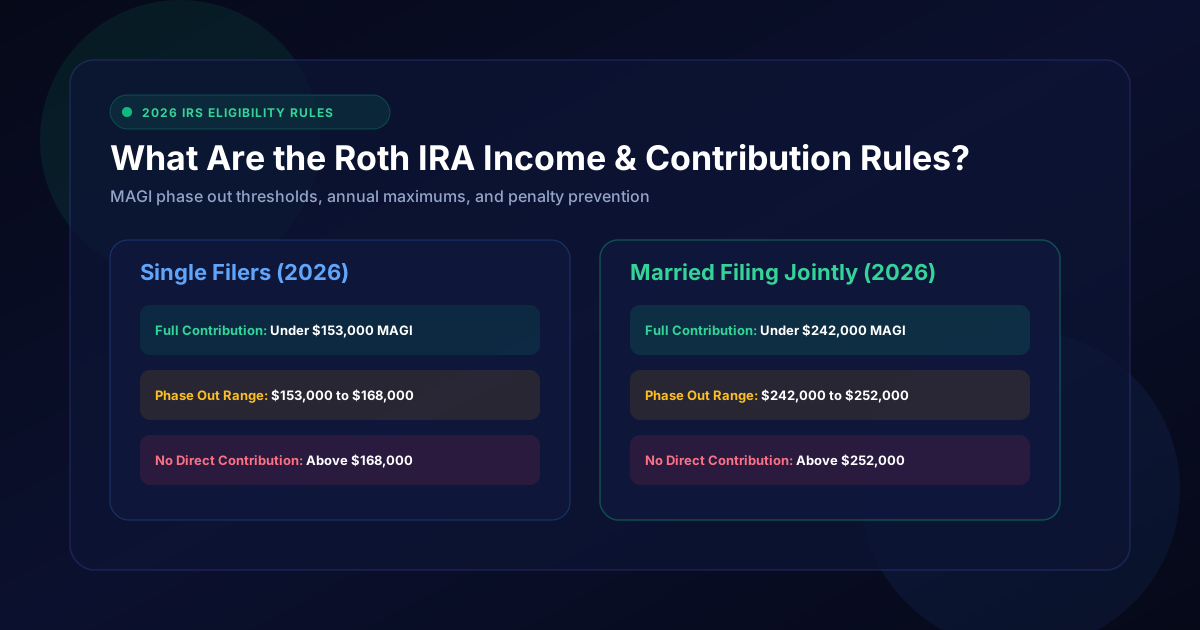
For 2026, single filers phase out gradually between $153,000 and $168,000 in income.
Married couples filing jointly phase out between $242,000 and $252,000 instead, according to Fidelity. Married filing separately faces a brutally narrow range starting at zero.
What Happens When Your Income Is Above the Limit?
Above that upper threshold, direct contributions simply aren’t permitted anymore.
Many high earners instead turn to a backdoor Roth strategy, contributing first to a traditional IRA and then converting those funds afterward. Watch the pro-rata rule if you hold other pre-tax IRA balances.
How Contribution Limits Work
The 2026 Roth contribution limits stand at $7,500 for those under 50, and $8,600 for those 50 and older, confirmed directly by the IRS.
That limit applies across all your IRAs combined, not per account.
What Is the Difference Between Eligibility and Contribution Amount?
Eligibility simply determines whether you can contribute at all in the first place.
Even when eligible, your actual contribution amount still can’t exceed your total earned income for that particular tax year.
How Married Couples Can Approach Roth Contributions
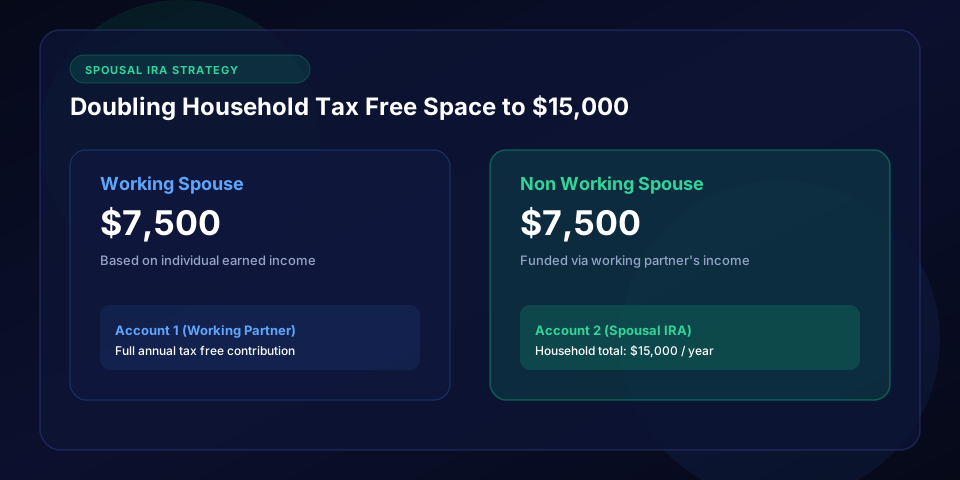
Each spouse individually gets their own separate contribution limit, even if only one partner currently works outside the home.
This is precisely where a spousal IRA becomes genuinely valuable for dual-account household planning. Two accounts mean $15,000 of combined annual space.
What Is a Spousal IRA?
A spousal IRA lets a non-working spouse contribute based entirely on the working spouse’s income, provided the couple files jointly and meets all relevant income requirements together as a household unit.
| Filing Status | Full Contribution Below | Phase-Out Range | No Contribution Above |
|---|---|---|---|
| Single | $153,000 | $153,000–$168,000 | $168,000 |
| Married Filing Jointly | $242,000 | $242,000–$252,000 | $252,000 |
How Excess Roth IRA Contributions Can Happen
Contributing too much, whether from a miscalculated income figure or simply exceeding stated limits, triggers a steep 6% annual penalty until it’s properly corrected.
“The 6% penalty repeats every year until you fix it. It does not go away quietly.”
Withdraw any excess amounts before your tax filing deadline arrives.
How to Check Your Eligibility Before Contributing
Calculate your MAGI honestly and early in the calendar year.
Waiting until December to check your Roth IRA income limits risks scrambling later to fix excess contributions under real time pressure.
Case Study: The Bonus Surprise
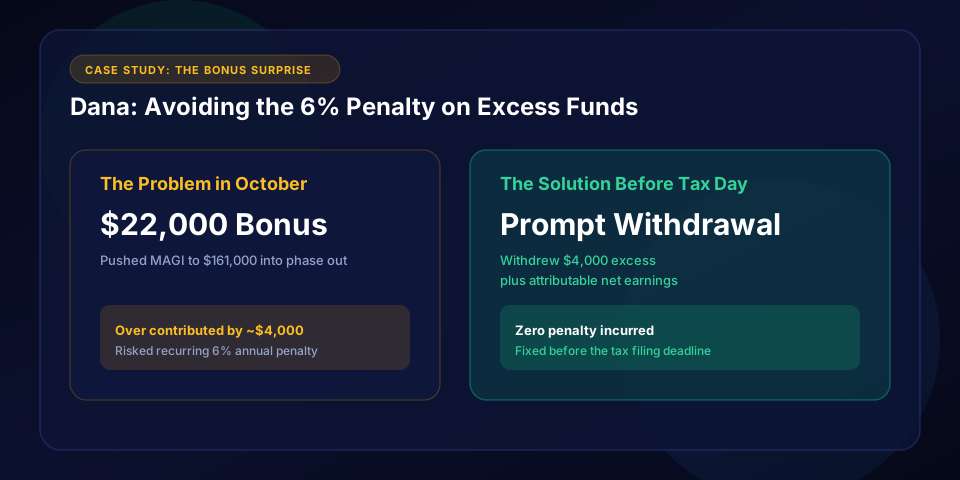
Dana maxed her Roth IRA each January. One year an unexpected $22,000 bonus pushed her MAGI to $161,000, landing squarely in the phase-out range. She had over-contributed by roughly $4,000. Catching it in October, she withdrew the excess plus earnings before the deadline and avoided the penalty entirely.
Conclusion
Understanding Roth IRA eligibility rules thoroughly genuinely protects you from making costly, avoidable mistakes.
Check your income carefully against current thresholds every single year, rather than simply assuming last year’s numbers still apply.
Ready to calculate your own tax free retirement savings?
Test different contribution rates, return assumptions, and compare against taxable accounts.