How Much Should You Contribute to a Roth IRA?
Figuring out your ideal Roth IRA contribution amount doesn't need to feel complicated or overwhelming. This guide breaks down realistic numbers so your retirement savings rate actually fits comfortably into your real, everyday life and budget.
Figuring out your ideal Roth IRA contribution amount doesn’t need to feel complicated or overwhelming. This guide breaks down realistic numbers so your retirement savings rate actually fits comfortably into your real, everyday life and budget.
What Is a Good Roth IRA Contribution Amount?
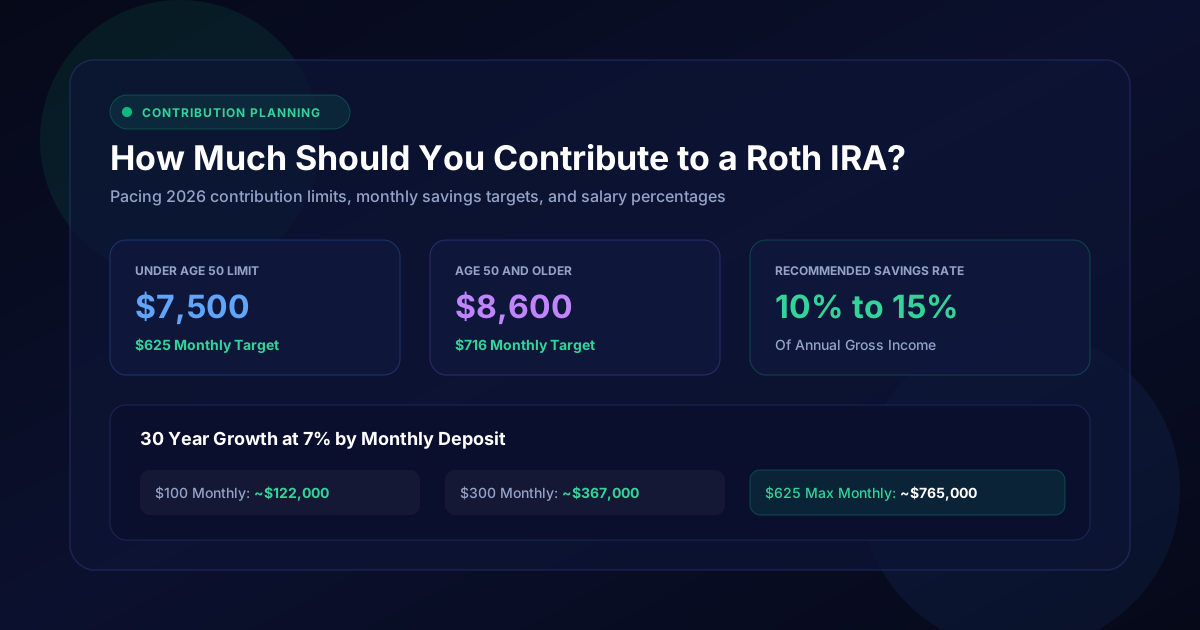
There’s no single magic number that works for everyone equally. A common target is 10% to 15% of income annually. For 2026, the Roth IRA contribution limit sits at $7,500 under age 50, or $8,600 for those 50 and older, according to IRS.gov.
That said, percentages beat fixed dollars as a planning tool. Someone earning $45,000 and saving 10% is doing better proportionally than someone earning $150,000 and saving $7,500.
How to Choose a Monthly Roth IRA Contribution
Divide your annual goal by twelve to find a manageable monthly figure. Maxing out at $7,500 works out to roughly $625 monthly.
Automatic contributions make this process painless, quietly pulling funds before you’re ever tempted to spend that money somewhere else instead. Schedule the transfer for payday, not month-end, and you’ll barely notice it leaving.
How Annual Contributions Affect Retirement Savings
Contributing the full limit every single year compounds dramatically over time. Miss a year, and unfortunately you can’t make that contribution room up later.
Retirement contribution consistency matters far more in the long run than any single impressive lump sum deposit ever could. Unlike a 401(k), unused Roth space vanishes permanently at the tax deadline.
How to Maximize Your Roth IRA Contributions
Front-loading contributions early in the year, if your budget allows it, gives your money extra time actually invested in the market.
Maximum Roth contribution strategies work best when paired thoughtfully with recurring investments spread steadily throughout the rest of the year too. January lump sums historically edge out December ones by a small margin.
How Income Affects Roth IRA Contributions
Your earned income must at least match whatever amount you plan to contribute. High earners face phase-outs starting at $153,000 for single filers or $242,000 for married couples filing jointly in 2026, per Fidelity.
A teenager earning $3,000 from a summer job can contribute $3,000, not the full limit. Earned income sets the ceiling.
How Your Age Should Influence Contributions
Younger savers can contribute comparatively less and still come out ahead, purely thanks to time working in their favor.
Those starting later should aim considerably higher, using catch-up contributions after age 50 to help close that gap more quickly and efficiently.
How Employer Retirement Plans Fit Into Your Strategy
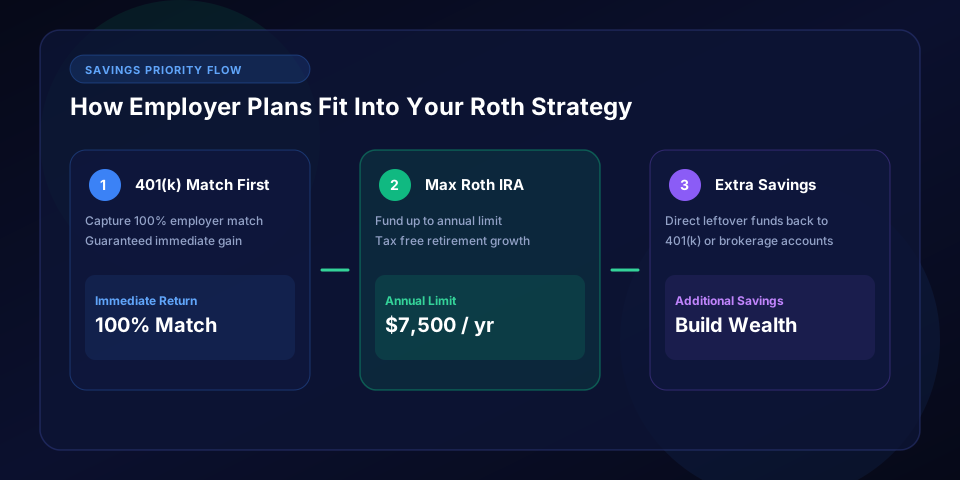
A 401(k) with an employer match should work alongside your Roth IRA, not instead of it. Contribute enough first to capture the full match.
“An employer match is a 100% return before your money ever touches the market.”
Then direct any extra savings toward your retirement account funding through the Roth account afterward.
How to Increase Contributions Over Time
Raise your contribution by 1% each year, or whenever you receive a raise at work.
This gradual, almost invisible approach barely affects your monthly budget while steadily improving your savings goal trajectory year after year without much conscious effort.
What to Do If You Cannot Max Out Your Roth IRA
Something is always genuinely better than nothing at all here. Even $50 monthly quietly builds a lasting habit worth keeping.
Contribution percentage matters considerably less than simply starting now and staying consistent for the long haul ahead.
| Monthly Contribution | Annual Total | 30-Year Estimate (7%) |
|---|---|---|
| $100 | $1,200 | ~$122,000 |
| $300 | $3,600 | ~$367,000 |
| $625 (max) | $7,500 | ~$765,000 |
How a Calculator Can Help Set Your Contribution Goal
A retirement savings plan tool shows exactly how today’s chosen number translates into tomorrow’s actual balance.
Adjust the inputs freely until the projected outcome genuinely matches your personal long-term goals and comfort level. Seeing the difference between $300 and $400 monthly often motivates better than any budgeting lecture.
Case Study: The 1% Ladder
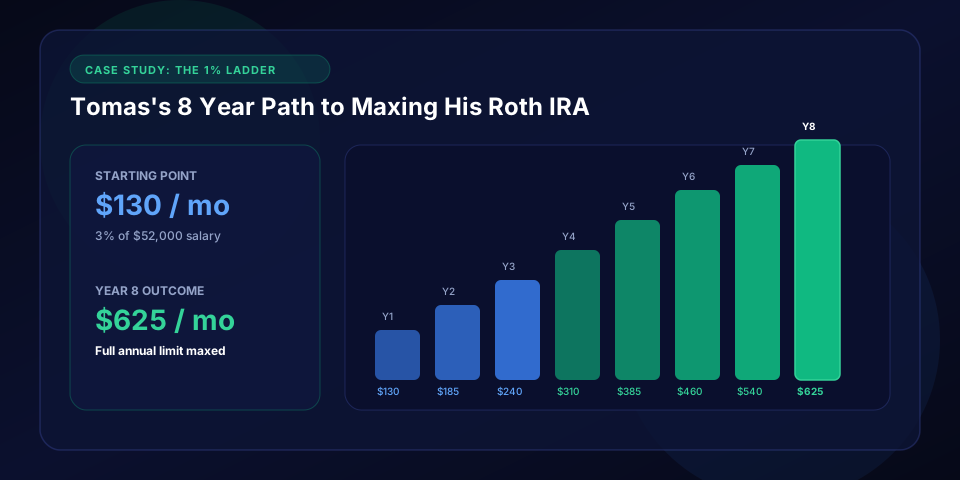
Tomás started at 3% of his $52,000 salary, about $130 monthly. Each January he added one percentage point and directed half of every raise toward the account. By year eight he was maxing out at $625 monthly without ever feeling a budget squeeze, because each increase landed alongside higher income.
Conclusion
Your ideal Roth IRA contribution ultimately depends on income, age, and personal goals, never a one-size-fits-all rule everyone should follow blindly.
Whether you’re maxing out completely or starting small and modest, every single contribution still meaningfully moves your retirement planning forward.
Ready to calculate your own tax free retirement savings?
Test different contribution rates, return assumptions, and compare against taxable accounts.