How Much Can a Roth IRA Grow Over Time?
Wondering just how big your nest egg could actually get? A Roth IRA growth calculator answers that question in seconds, turning decades of patience into one clear dollar figure.
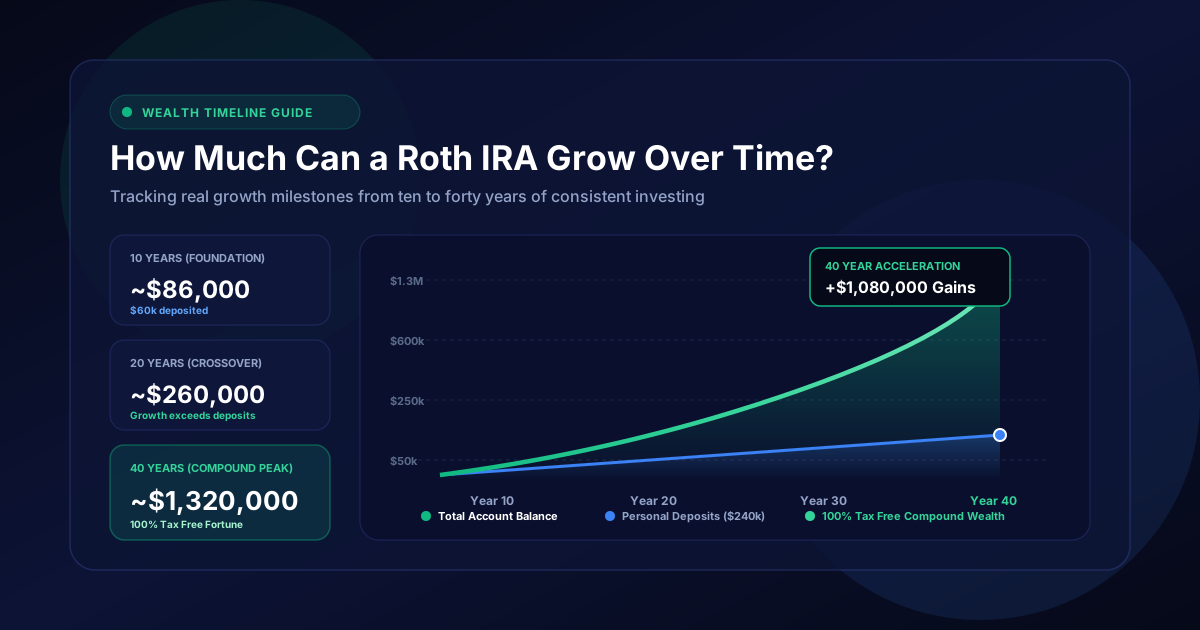
Wondering just how big your nest egg could actually get? A Roth IRA growth calculator answers that question in seconds, turning decades of patience into one clear dollar figure. Let’s walk through real Roth IRA growth across different timelines, so the numbers stop feeling abstract and start feeling personal.
What Happens to a Roth IRA Over 10 Years?
Ten years feels short in retirement growth terms, but it still matters. Investing $500 monthly at a 7% annual return grows to roughly $86,000, with most of that still your own contributions. Long term compounding hasn’t fully kicked in yet at this stage.
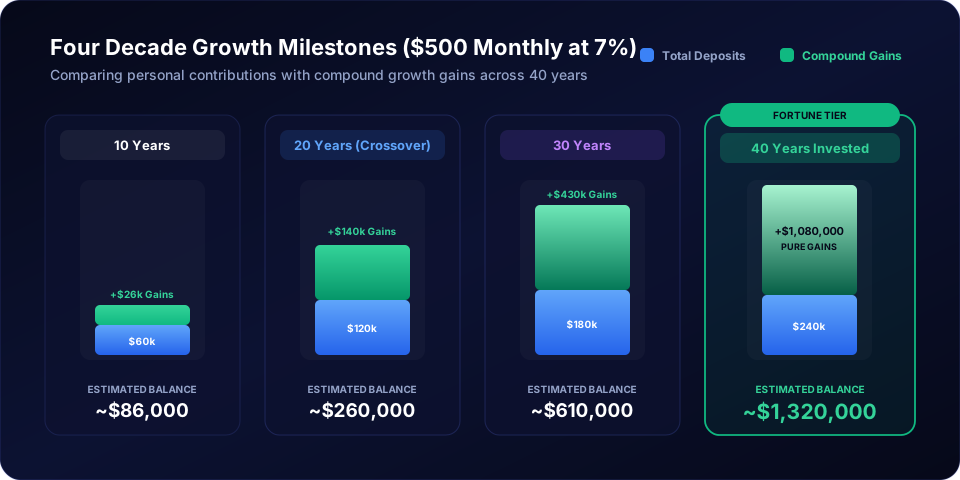
Still, this foundation sets up everything that follows, so don’t underestimate the first decade. Of that $86,000, you deposited $60,000 and the market added $26,000. Growth accounts for less than a third, which is exactly why the first ten years test your patience most.
How Roth IRA Growth Looks After 20 Years
By year twenty, momentum genuinely shifts in your favor. That same $500 monthly habit balloons past $260,000, and investment earnings now outweigh what you actually deposited.
This is exactly where compound returns start doing the real heavy lifting. Many investors say this stretch feels like watching a snowball finally pick up real speed downhill. Your contributions total $120,000, meaning growth contributed $140,000 without any extra effort from you.
How 30 Years of Compounding Changes Your Balance
Thirty years is where compound investing gets genuinely exciting to watch. Your balance could top $610,000, with earnings making up more than two thirds of that final total.
Wealth accumulation accelerates sharply here, because gains keep generating their own gains without any extra effort from you. This is the payoff for staying invested through market ups and downs, including the crashes that tempted you to sell.
How 40 Years of Investing Can Build Wealth
Give it forty years, and the results border on unbelievable. That same modest monthly habit could exceed $1.3 million by retirement.
Retirement account growth over four decades shows exactly why starting in your twenties, even with small amounts, pays off enormously later. Time, not luck, is doing most of the work here.
| Years | Monthly Contribution | Total Contributed | Estimated Balance (7%) |
|---|---|---|---|
| 10 | $500 | $60,000 | ~$86,000 |
| 20 | $500 | $120,000 | ~$260,000 |
| 30 | $500 | $180,000 | ~$610,000 |
| 40 | $500 | $240,000 | ~$1,320,000 |
What Happens When You Start Investing Young
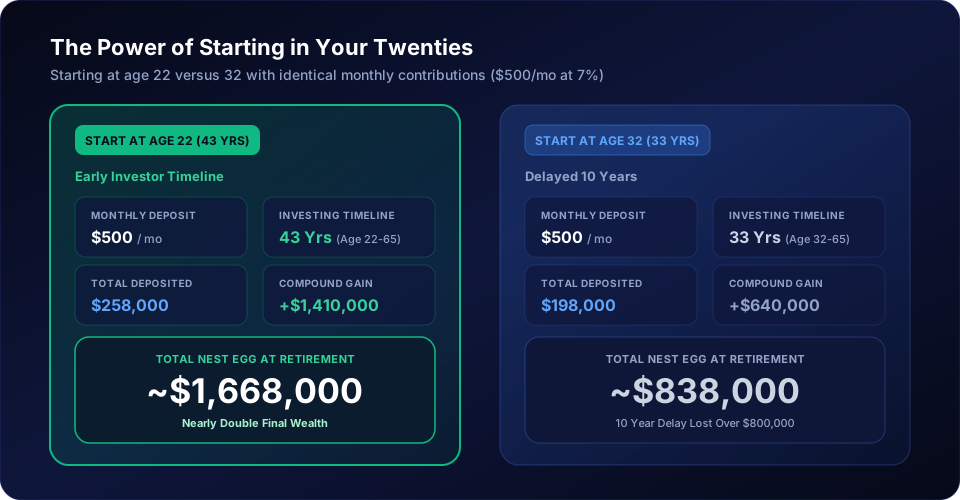
Starting at 22 instead of 32 can nearly double your final balance, even with identical contribution amounts. Investment horizon matters more than contribution size, which surprises a lot of new investors.
Warren Buffett once put it simply: someone’s sitting comfortably today because someone else planted a tree decades ago. The same logic applies to every dollar you invest in your twenties.
How Small Contributions Can Become Large Balances
Even $100 a month adds up more than people expect. Over 30 years at 7%, that modest habit becomes roughly $122,000.
Contribution growth proves that consistency beats waiting around for extra money to magically appear. Small, boring, repeated deposits genuinely outperform sporadic large ones over time.
How Investment Returns Affect Long Term Growth
A 2% difference in returns sounds tiny but really isn’t. At 5% versus 7% over 30 years, your final balance could differ by $150,000 or more.
“Two percentage points is the difference between a comfortable retirement and an anxious one.”
Compound returns are extremely sensitive to your assumed rate, so it pays to run several scenarios rather than trusting just one optimistic number.
How Contributions and Earnings Build Your Balance
Your retirement balance comes from two distinct sources: what you personally deposit and what the market adds on top. Early on, contributions clearly dominate the total.
Later, investment earnings take over as the primary growth driver, often contributing more than you ever put in yourself. The crossover typically happens somewhere around year fifteen.
What Happens When You Increase Contributions
Bumping your contribution by just $50 a month, especially alongside yearly raises, can add tens of thousands of dollars by retirement.
Savings growth compounds noticeably faster when contributions rise steadily alongside your income, rather than staying flat for decades while your paycheck grows around it.
How to Project Your Roth IRA Balance
Use a retirement projection tool with your current age, contribution amount, and expected return plugged in. Test a few different scenarios side by side.
Tax free growth means every dollar in that final projection is genuinely yours, with nothing owed to the IRS later.
Case Study: The Quiet Millionaire
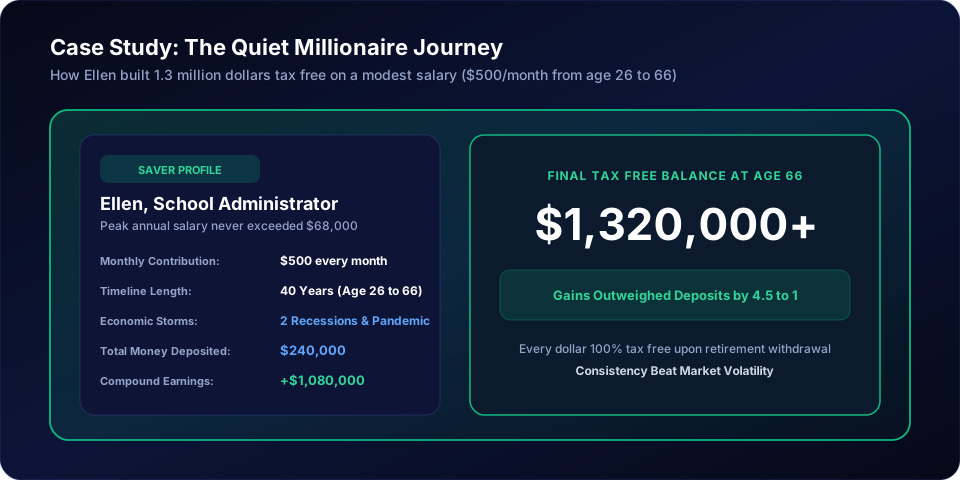
Ellen, a school administrator, never earned more than $68,000 annually. She contributed $500 monthly from age 26 to 66, forty years straight, through two recessions and one pandemic. Her total deposits came to $240,000. Her final balance crossed $1.3 million, every dollar tax free on withdrawal.
Conclusion
Roth IRA growth rewards patience above almost everything else you could optimize. Whether you’re ten years in or forty years deep, compound growth transforms modest, boring habits into a genuinely impressive retirement account balance.
Start today, stay consistent through the noise, and let time quietly do what it does best.
Ready to calculate your own tax free retirement savings?
Test different contribution rates, return assumptions, and compare against taxable accounts.