How Does Your Age Affect Roth IRA Growth?
Age dramatically shapes your overall Roth IRA growth story more than most people initially realize. The exact same contribution habit produces wildly different final results depending entirely on when you first start. Let's break it down honestly by decade.
Age dramatically shapes your overall Roth IRA growth story more than most people initially realize. The exact same contribution habit produces wildly different final results depending entirely on when you first start. Let’s break it down honestly by decade.
How Starting at Age 18 Changes Retirement Growth
Starting at 18 with even fairly modest contributions can produce genuinely jaw-dropping results by age 65.
Forty-seven full years of compound growth turns small, unremarkable deposits into massive retirement balance figures that seem almost unbelievable in hindsight. A teenager with summer job income can legally contribute, provided the money is genuinely earned.
How Roth IRA Growth Looks in Your 20s
Your 20s represent the genuine golden window for investing. Early investing here, even done irregularly, sets up literal decades of powerful compounding ahead.
A Roth IRA at 20 with modest contributions can realistically still reach seven figures by retirement age. The tax argument also favors young savers, since their current bracket is usually the lowest it will ever be.
How Starting in Your 30s Affects Your Results
Starting in your 30s still works out beautifully, just with somewhat less margin for error along the way.
A Roth IRA at 30 typically needs slightly higher contributions to eventually match what dedicated 20-year-olds achieve with noticeably less effort. Most people’s income also rises here, making the larger deposits realistic.
What Happens When You Start in Your 40s
Time genuinely shrinks at this stage, but it’s far from being too late to start.
A Roth IRA at 40 benefits meaningfully from peak earning years, allowing considerably larger contributions to partially offset that shorter investment timeline ahead.
How to Catch Up With Roth IRA Contributions in Your 50s
Catch-up contributions let those 50 and older add an extra $1,100 annually starting in 2026.
Combined with typically peak earning years, this genuinely accelerates a Roth IRA at 50 in a meaningful and noticeable way. Mortgage payoffs and grown children often free up serious monthly cash here too.
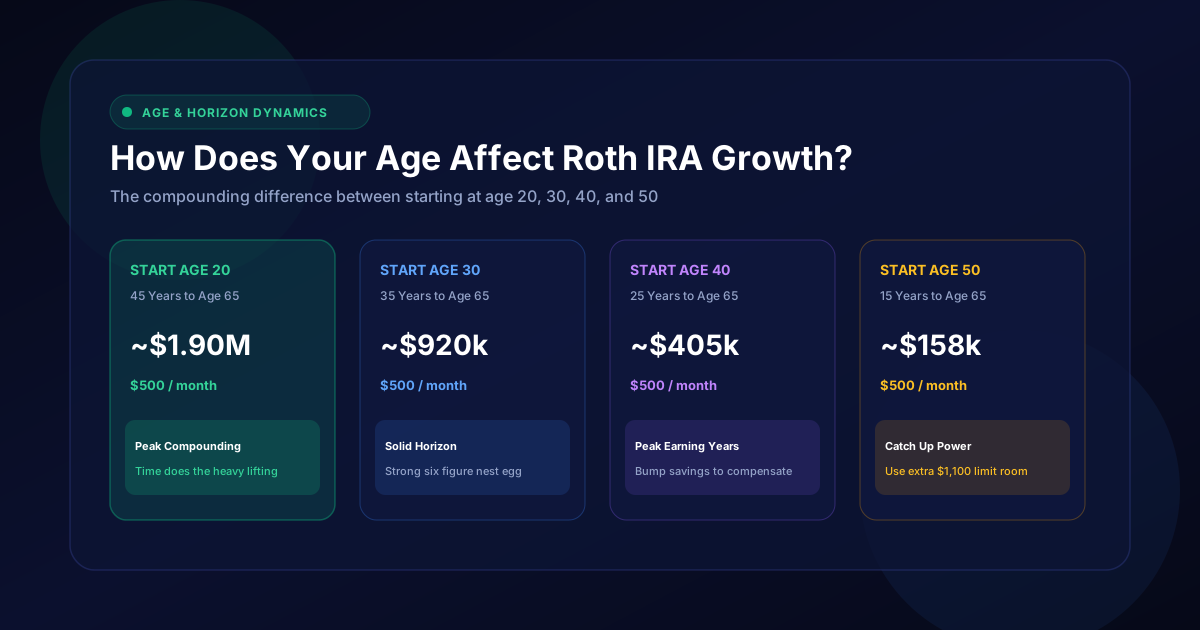
| Starting Age | Years to 65 | $500/Month at 7% |
|---|---|---|
| 20 | 45 | ~$1,900,000 |
| 30 | 35 | ~$920,000 |
| 40 | 25 | ~$405,000 |
| 50 | 15 | ~$158,000 |
How Retirement Age Changes Your Projection
Delaying retirement by even just five extra years significantly boosts your final overall balance.
Retirement age flexibility remains one of the easiest levers to pull if you happen to be running behind schedule financially. Those extra years add contributions and compounding while shortening the drawdown period.
How Time in the Market Influences Compounding
Missing the market’s absolute best days genuinely hurts more than simply avoiding its worst ones.
“Time in the market beats timing the market, every decade on record.”
Staying invested consistently, regardless of alarming headlines, protects your long-term compound growth trajectory far better than reactive timing attempts.

How Contribution Increases Can Offset a Late Start
Late starters can meaningfully compensate by contributing more aggressively than average.
Increasing contributions by just 2% yearly genuinely helps close the gap left behind by lost investment horizon time earlier on.
How Age-Based Projections Should Be Interpreted
These particular numbers rely on flat, simplified assumptions throughout. Real life inevitably includes raises, unexpected market dips, and various life changes along the way.
Treat age-based projections as a rough compass, never a firm guarantee.
How to Calculate Your Roth IRA Target by Age
Many financial advisors suggest having one times your salary saved by 30, three times by 40, and six times by 50.
Use these rough savings milestones simply as helpful checkpoints along your journey, not as sources of guilt.
Case Study: The Late Bloomer
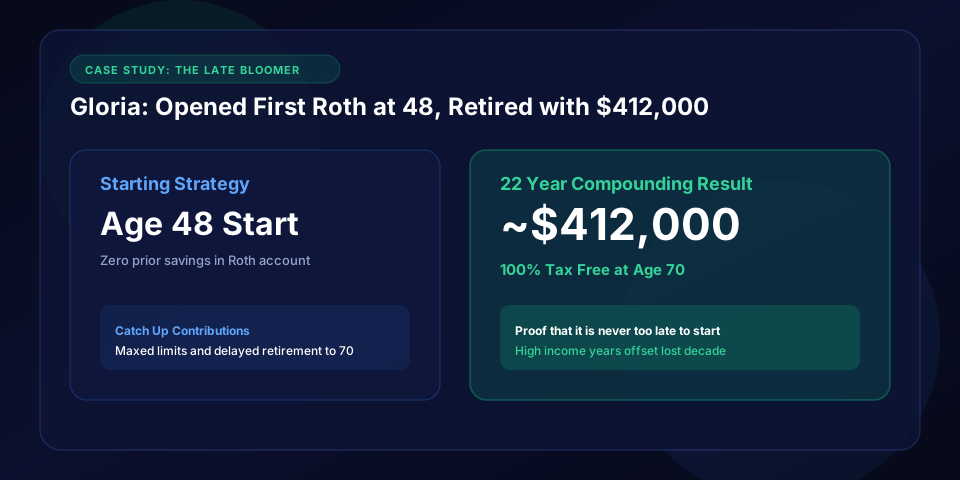
Gloria opened her first Roth IRA at 48 with nothing saved. She maxed out every year, adding catch-up contributions from 50 onward, and delayed retirement to 70. Twenty-two years of aggressive saving at 7% brought her to roughly $412,000, tax-free, from a start most people would have called hopeless.
Conclusion
Age genuinely shapes your Roth IRA growth story more than almost any other single factor involved.
Whatever your particular starting point happens to be, the best possible move remains refreshingly simple: start now, and stay consistent no matter what.
Ready to calculate your own tax free retirement savings?
Test different contribution rates, return assumptions, and compare against taxable accounts.