How Does a Roth IRA Compare With a Traditional IRA?
Choosing between account types genuinely shapes your entire long-term tax strategy. This Roth IRA comparison breaks down exactly how each account type handles contributions, withdrawals, and taxes in very different ways.
Choosing between account types genuinely shapes your entire long-term tax strategy. This Roth IRA comparison breaks down exactly how each account type handles contributions, withdrawals, and taxes in very different ways.
What Is the Main Difference Between Roth and Traditional IRAs?
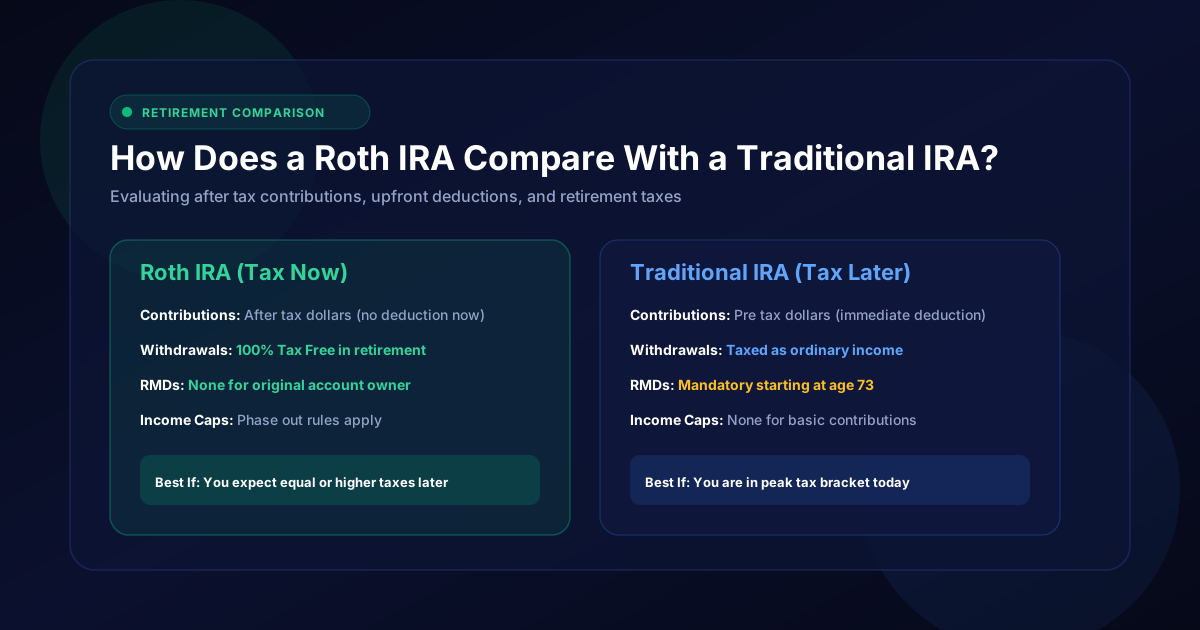
The core difference ultimately comes down to timing of taxes. Roth IRA vs Traditional IRA really comes down to paying taxes now versus paying them much later instead.
Everything else about these accounts flows directly from that single foundational decision. Contribution limits are identical, investment options are identical, and both grow without annual taxation along the way.
How Roth IRA Contributions Are Taxed
Roth contributions rely on after-tax contributions exclusively. You pay income tax first, then invest whatever remains.
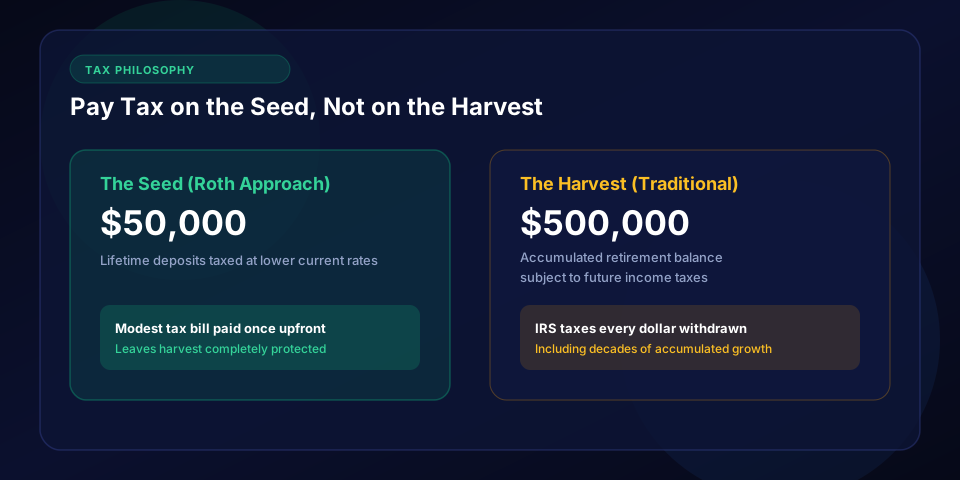
Growth and qualified withdrawals later on are completely tax-free, no matter how enormously large the account eventually grows over time. A $50,000 contribution that becomes $500,000 owes nothing at all.
How Traditional IRA Contributions Are Taxed
Traditional accounts instead rely on pre-tax contributions, which are often immediately deductible. You get a nice tax break right now.
But you’ll owe retirement taxes on withdrawals later, including every bit of the accumulated growth too. In effect, the IRS becomes a silent partner in your account.
How Withdrawals Differ Between the Two Accounts
Roth IRA withdrawals of qualified earnings owe absolutely nothing to the IRS.
Traditional withdrawals, by contrast, are taxed fully as ordinary income, regardless of how much of that money was original contributions versus accumulated investment growth.
How Required Minimum Distributions Affect Traditional IRAs
Traditional IRAs force required minimum distributions, commonly called RMDs, starting at age 73.
Roth IRAs carry no RMDs whatsoever for the original account owner, giving you genuinely total flexibility over when and how you withdraw funds. That also makes Roth accounts better estate-planning vehicles.
How Income Can Affect Roth IRA Eligibility
High earners may find themselves blocked entirely from making direct Roth contributions.
Traditional IRAs, however, carry no income cap for contributing at all, though tax deduction eligibility can still phase out based on workplace retirement coverage.
When a Roth IRA May Be More Attractive
If you genuinely expect higher tax rates later in life, or simply want tax-free income during retirement, a Roth typically wins out.
“Pay tax on the seed, not on the harvest.”
Younger, lower-income earners especially benefit from paying their taxes now while rates remain comparatively low.
When a Traditional IRA May Make More Sense
High earners currently in peak tax years often strongly prefer the immediate upfront deduction.
If your tax rate drops significantly by retirement, deferring those taxes now can genuinely save considerable money down the road.
| Feature | Roth IRA | Traditional IRA |
|---|---|---|
| Contribution Tax | After-tax | Pre-tax (often deductible) |
| Withdrawal Tax | Tax-free (qualified) | Taxed as income |
| RMDs | None | Required at 73 |
| Income Limit | Yes, phases out | No, for contributing |
How Tax Rates Influence the Decision
Compare your current tax bracket honestly against your realistically expected retirement bracket.
Lower now, higher later clearly favors a Roth account. Higher now, lower later instead favors a traditional account overall. Nobody knows future tax law, which argues for holding some of each.
How to Compare Both Accounts With a Calculator
A Roth IRA vs traditional IRA calculator models both scenarios carefully side by side, showing your realistic after-tax retirement income under each retirement account comparison clearly and transparently laid out.
Case Study: The Split Decision
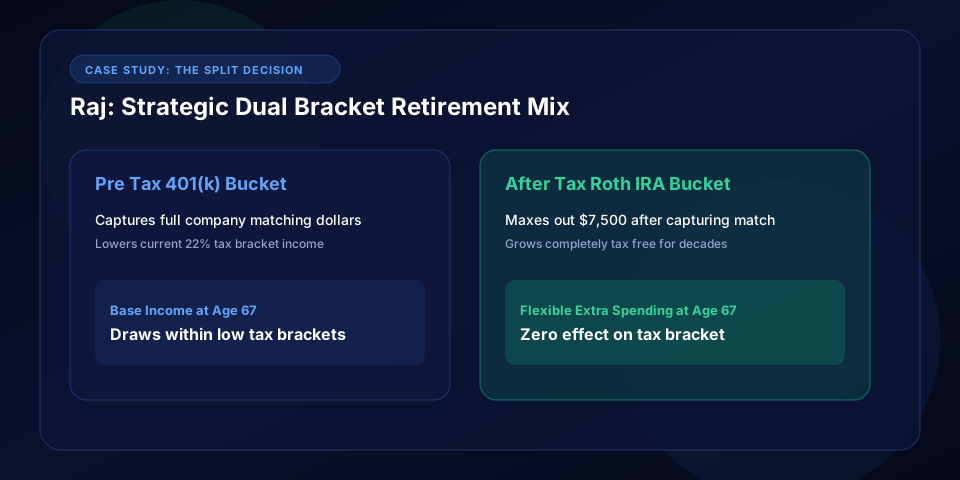
Raj, a 34-year-old engineer in the 22% bracket, split his savings deliberately. He captured his full 401(k) match with pre-tax dollars, then maxed a Roth IRA with after-tax money. At 67, he can draw taxable and tax-free income in whatever mix keeps him in the lowest bracket that year.
Conclusion
Neither account type is universally better for every single person. Your ideal retirement tax strategy genuinely depends on current income, future expectations, and personal preference.
Many savers ultimately benefit most from thoughtfully holding both accounts together.
Ready to calculate your own tax free retirement savings?
Test different contribution rates, return assumptions, and compare against taxable accounts.