How Does a Roth IRA Calculator Work? A Simple Guide to Estimating Your Retirement Savings
Planning for retirement can feel overwhelming, especially when you are staring at a blank spreadsheet wondering where to start. Discover how a Roth IRA calculator works to estimate savings in seconds.
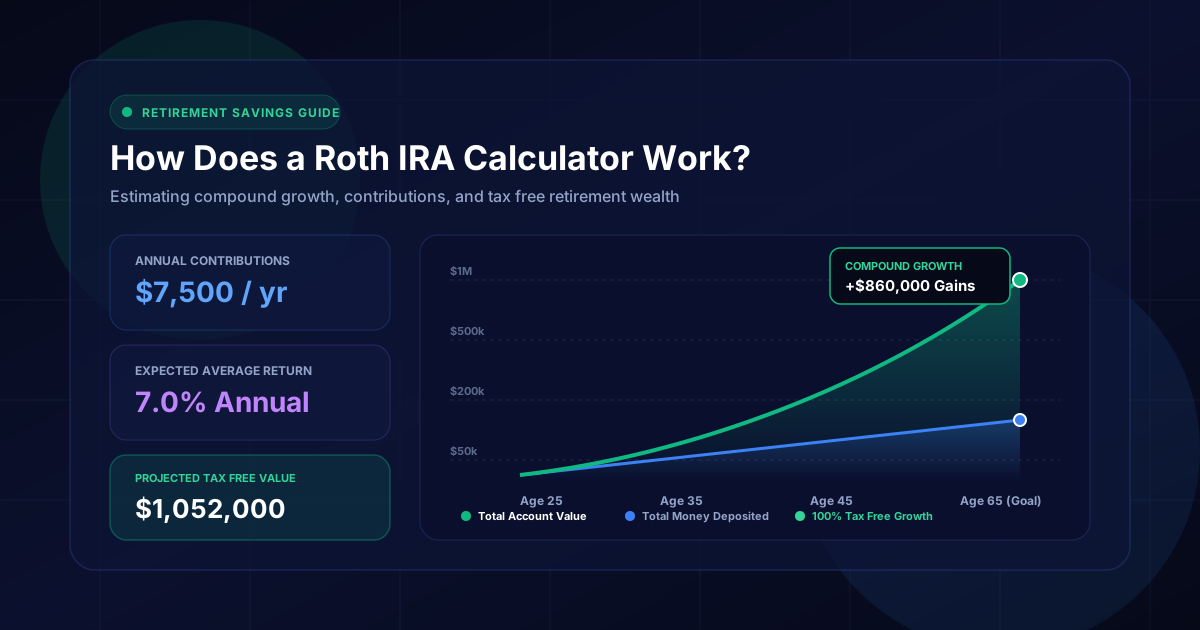
Planning for retirement can feel overwhelming, especially when you’re staring at a blank spreadsheet wondering where to start. That’s exactly why a Roth IRA calculator exists. It takes the guesswork out of long term planning and gives you a clear savings projection in seconds. This guide breaks down exactly how does a Roth IRA calculator work, so you can use one with confidence.
What a Roth IRA Calculator Actually Calculates
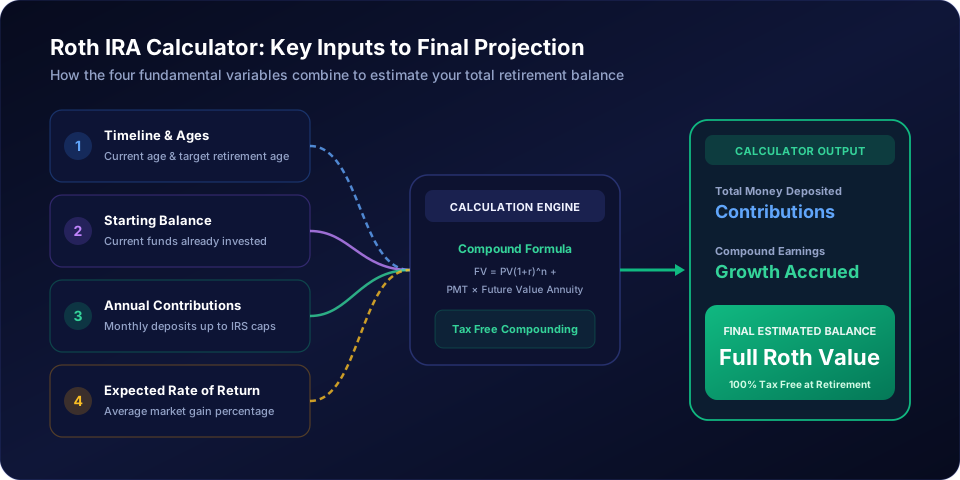
A Roth IRA calculator estimates your account’s future retirement value based on a few key numbers. It combines your starting balance, contributions, and expected return to project your retirement balance at a chosen age. Think of it as a financial crystal ball, minus the mysticism.
Unlike a basic savings tool, a Roth IRA growth calculator also accounts for tax free withdrawals. Since Roth accounts grow through tax free retirement savings, the calculator shows your full balance, not a taxed down version. That’s a big deal for long term retirement planning. A traditional account projection showing $600,000 might really mean $450,000 after taxes. A Roth projection showing $600,000 means exactly that.
How Roth IRA Contributions Affect Future Savings
Your annual contribution is the fuel behind your Roth retirement savings. For 2026, the IRS allows up to $7,500 per year, or $8,600 if you’re 50 or older, according to IRS.gov. Every dollar you add increases your contribution growth potential.
Small, steady deposits add up fast. Contributing $500 a month instead of $6,000 once a year barely changes your total contributions. However, it does change your investment timeline, since money invested earlier has more time to grow. The calculator captures this difference, which is why contribution frequency deserves a real look rather than a shrug.
What Investment Growth Means in a Roth IRA
Roth IRA investment growth isn’t guaranteed. Your money sits in mutual funds, ETFs, or stocks, not a plain savings account. That means returns fluctuate year to year, sometimes wildly.
A calculator smooths this out using an average. It’s not predicting the future perfectly. It’s giving you a reasonable investment projection based on historical investment returns, so you can plan with realistic expectations instead of guesswork. Real markets never deliver a steady 7% annually. They deliver 22% one year and negative 11% the next, then average out over decades.
How Compound Growth Builds Retirement Wealth
Compound growth is the real engine behind retirement wealth. Your returns start earning their own returns. It’s like a snowball rolling downhill, picking up more snow with every turn.
Here’s a quick example using a retirement calculator with a 7% average return:
| Years Invested | $500/Month Contribution | Estimated Balance |
|---|---|---|
| 10 years | $60,000 total | ~$87,000 |
| 20 years | $120,000 total | ~$260,000 |
| 30 years | $180,000 total | ~$610,000 |
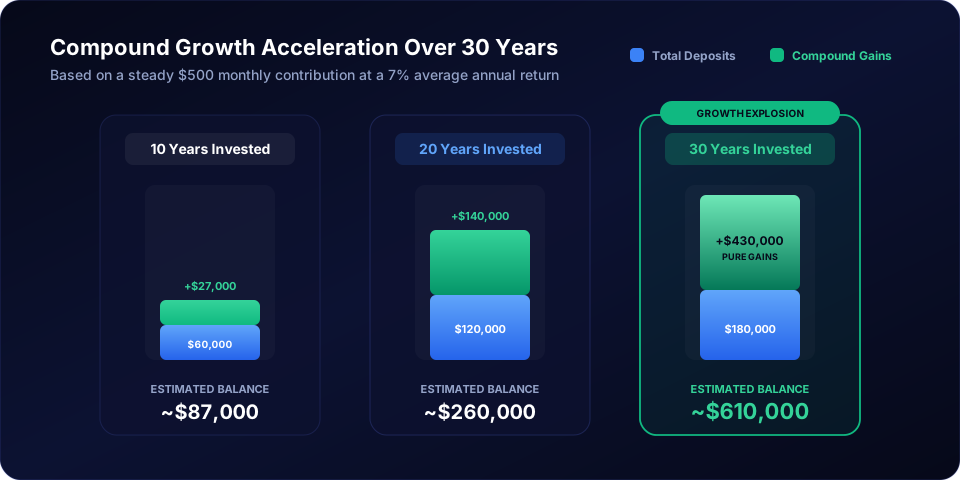
Notice how the growth accelerates. Between year 20 and year 30, you contribute just $60,000 more, yet your balance jumps by $350,000. That gap is Roth IRA compound growth calculation in action.
How Time Changes Roth IRA Results
Your investment horizon matters more than almost anything else. A 25 year old investor has decades for compound growth to work its magic. A 45 year old starting fresh has less runway, even with larger contributions.
As author J.L. Collins put it, “Time is the friend of the wonderful business, the enemy of the mediocre.” The same applies here. Starting early beats trying to catch up later, every single time. Ten years of delay typically costs more than doubling your monthly contribution can recover.
What Inputs You Need for a Roth IRA Calculation
Every Roth IRA calculator needs a handful of details: your current age, planned retirement age, current balance, contribution amount, and expected rate of return. Leave one out, and your Roth IRA calculator results won’t reflect reality.
Accuracy matters here. Overestimating your return or underestimating your timeline skews your retirement nest egg projection significantly. A single percentage point of optimism compounds into a six figure fantasy over thirty years.
How Annual and Monthly Contributions Compare
Contribution frequency affects growth slightly. Monthly deposits benefit from dollar cost averaging, spreading purchases across market highs and lows. Annual lump sums invest all at once, which can work better in rising markets, but adds more risk if timing is poor.
Monthly also wins on discipline. Automatic transfers happen whether or not you remember, which removes the biggest threat to any savings plan: yourself.
How to Read Roth IRA Calculator Results
When you calculate Roth IRA balance projections, you’ll typically see two numbers: total contributions and total growth. The gap between them shows how much work compound growth did for you.
Treat these numbers as estimates, not promises. Life happens. Markets shift. Run your numbers yearly to keep your retirement income goals on track.
What Rate of Return Should You Use?
Most planners suggest 6% to 8% for a diversified retirement portfolio, based on long term stock market averages. Using 12% might feel exciting, but it sets unrealistic expectations.
“Plan with the conservative number. Celebrate if you beat it.”
Try running your estimate Roth IRA growth scenario at both 5% and 8%. That range gives you a realistic floor and ceiling for planning purposes.
How Accurate Are Online Roth IRA Calculators?
No Roth IRA future value calculator can predict markets perfectly. Roth IRA calculator assumptions rely on averages, not certainties. Tax law changes, market crashes, and life events all affect real world outcomes.
Still, calculators remain genuinely useful. They turn abstract goals into concrete numbers, helping you decide how much should I contribute to a Roth IRA today.
Case Study: Two Savers, One Decade Apart
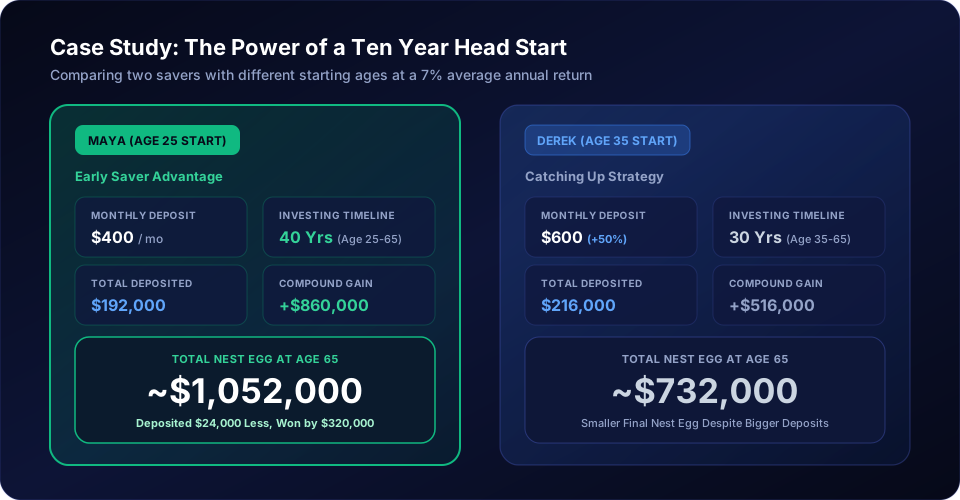
Maya started contributing $400 monthly at 25. Her friend Derek waited until 35, then contributed $600 monthly to catch up. At 65, using a 7% return, Maya reached roughly $1,052,000. Derek reached about $732,000, despite depositing $24,000 more overall. The ten year head start beat the larger paycheck.
Conclusion
A Roth IRA calculator won’t predict your exact future, but it gives you a powerful starting point. By understanding contributions, expected return, and time, you can build a realistic retirement savings estimate.
Start early, contribute consistently, and let compound growth do the heavy lifting toward your qualified distributions down the road.
Ready to calculate your own tax free retirement savings?
Test different contribution rates, return assumptions, and compare against taxable accounts.