How Do Roth IRA Withdrawals Work?
Roth IRA withdrawals follow specific, well-defined rules that genuinely reward patience while clearly penalizing early access attempts. Here's exactly what happens in practice when you actually pull money out of the account.
Roth IRA withdrawals follow specific, well-defined rules that genuinely reward patience while clearly penalizing early access attempts. Here’s exactly what happens in practice when you actually pull money out of the account.
What Happens When You Withdraw Money From a Roth IRA?
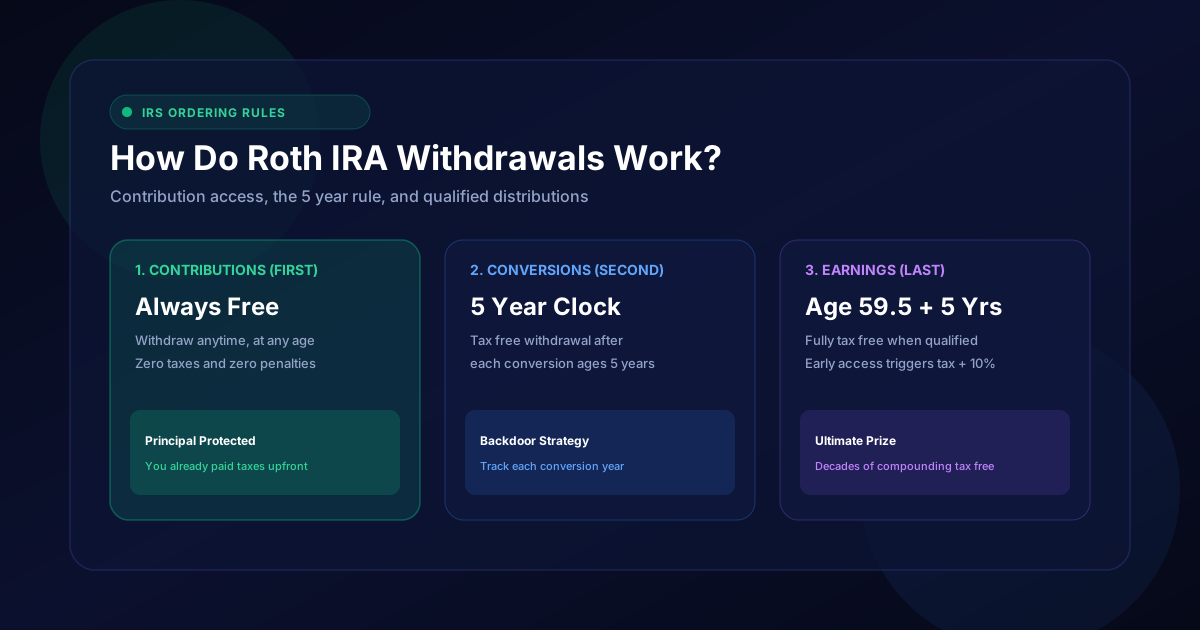
Withdrawals follow strict ordering rules under IRS guidance: contributions always come out first, completely tax and penalty free, no exceptions.
Earnings come out only last and face genuinely different treatment entirely under those same rules. This ordering works heavily in your favor, since most accounts hold years of contributions before any earnings become accessible.
How Roth IRA Contributions Differ From Earnings
Your original Roth IRA contributions can be withdrawn at any time whatsoever, penalty-free, since you already paid taxes on that money upfront.
Roth IRA earnings, by contrast, represent the portion carrying real restrictions. Keep records of your total contributions, because your custodian may not track this cleanly across account transfers.
What Makes a Roth IRA Distribution Qualified?
A qualified distribution genuinely requires two separate things to be true simultaneously.
The account must be at least five years old, and you must be 59½ or meet another specific qualifying exception under the rules. Both conditions, not either one.
How the Five-Year Rule Works
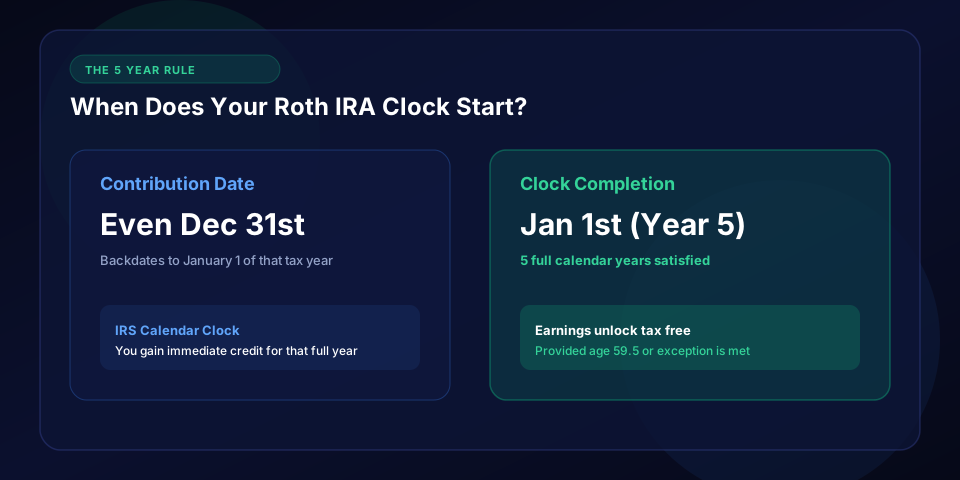
The five-year rule technically starts counting from January 1st of the year you first contributed anything at all.
Even a December contribution gets treated as though it started that same January instead. Opening an account with $50 in your twenties starts the clock permanently, which is worth doing early.
How Age Can Affect Roth IRA Withdrawals
Withdrawing earnings before turning 59½ typically triggers both regular income tax plus a steep 10% penalty, unless a specific exception clearly applies.
After 59½, once the five-year rule is met, everything becomes genuinely tax-free.
What Happens With Early Roth IRA Withdrawals?
Early withdrawal of earnings before meeting both required conditions usually costs you tax plus an additional penalty on top.
This is precisely why those strict ordering rules matter so much in practice. You’d have to exhaust every contributed dollar before touching earnings at all.
How Taxes May Apply to Roth IRA Earnings
Non-qualified earnings withdrawals get taxed fully as ordinary income, on top of whatever applicable penalty applies as well.
This combination can meaningfully reduce your actual take-home withdrawal amount in real terms, sometimes by a third or more.
What Are Roth IRA Exceptions for Early Withdrawals?
Recognized exceptions include a first-time home purchase up to $10,000, qualified education expenses, permanent disability, and certain unreimbursed medical costs.
These specific situations avoid the 10% penalty, though general tax rules can still vary.
| Withdrawal Type | Age Requirement | Tax Treatment |
|---|---|---|
| Contributions | Any age | Tax-free, penalty-free |
| Qualified Earnings | 59½ + 5-year rule | Tax-free |
| Non-Qualified Earnings | Before 59½ | Taxed + 10% penalty |
How Retirement Withdrawals Can Affect Your Income
Since qualified Roth withdrawals genuinely don’t count as taxable income at all, they won’t push you into a noticeably higher tax bracket.
“Tax-free income is invisible to the IRS, and that invisibility has real value.”
They also won’t affect Social Security taxation the way traditional withdrawals typically might.
How to Estimate Roth IRA Withdrawals
Plan your future withdrawals carefully around the five-year rule and your current age.
A Roth IRA withdrawal calculator genuinely helps map out exactly when your funds become fully and freely accessible.
Case Study: The Emergency That Wasn’t
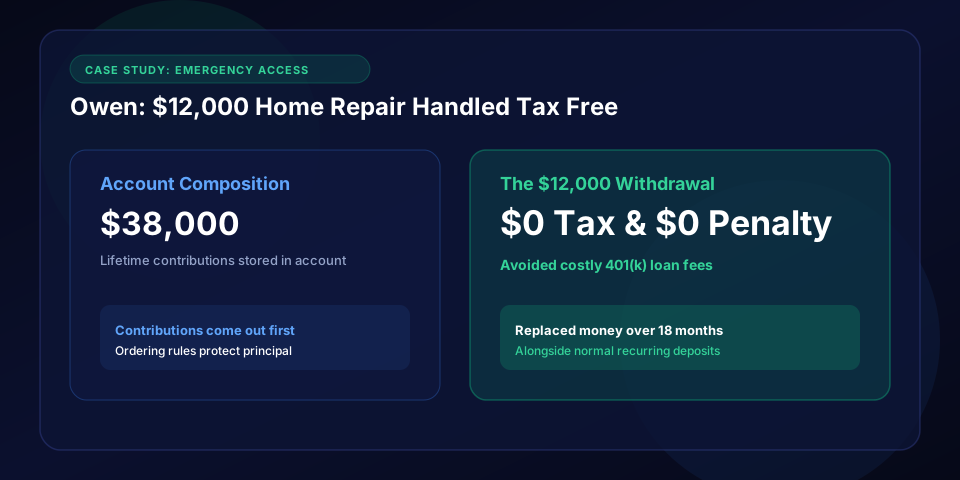
Owen, 41, faced a $12,000 home repair and considered a 401(k) loan. Instead he withdrew $12,000 from his Roth IRA, which held $38,000 in lifetime contributions. Because contributions come out first, he paid zero tax and zero penalty. He replaced the money over eighteen months alongside his normal deposits.
Conclusion
Roth IRA withdrawals ultimately reward those savers willing to wait patiently.
Understanding the contribution versus earnings distinction, plus that five-year clock, genuinely helps you access your own money without paying unnecessary taxes or penalties.
Ready to calculate your own tax free retirement savings?
Test different contribution rates, return assumptions, and compare against taxable accounts.